How to Double or Quadruple your Reading Speed and Beyond
It might seem like a pipe dream or wishful thinking to imagine quadrupling your reading speed or going even faster. Just think how many more books you could read or how much more free time you’d have if you read the same amount in a quarter of the time. It’s not as fanciful as it might sound. With a few simple changes to the way you read, you can eliminate the bottlenecks that slow you down.
The reason why so many people read slowly is that they have slipped into bad habits. Speed reading is a combination of skills involving both the eyes and the brain. Even so, simply unlearning the Inefficient way we move our eyes can allow you to multiply your reading speed by a factor of four or more without loss of comprehension.
Fixations
The eyes work by a series of saccades (moving the eye) alternating with fixations when the eye pauses to take in a static image. The brief pause gives the brain a chance to assimilate and comprehend the words upon which the eyes are fixated. If you shake a camera when taking a photo you get a blurry image.
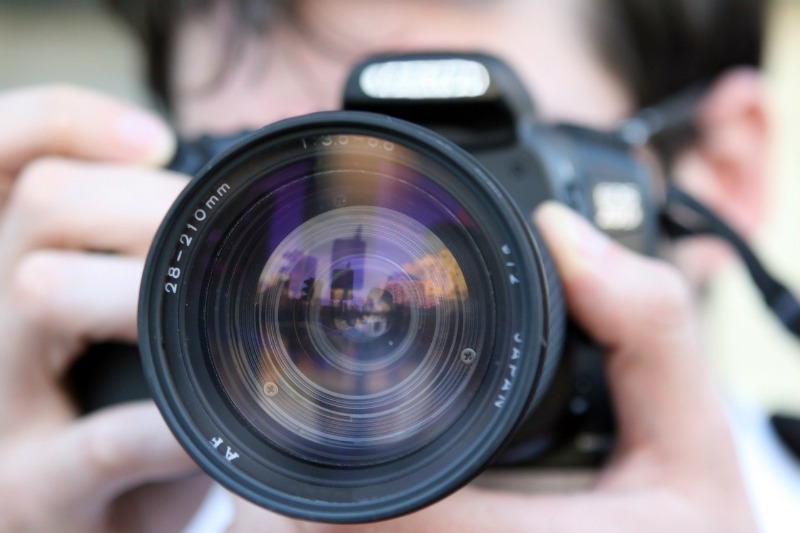
The same would be true of the eyes if they took in information whilst moving. If you look in a mirror you’ll notice that you cannot see your eyes in motion. The subconscious cleverly edits out the movement and we can only perceive the fixations. This phenomenon is called Saccadic Masking. If you very gently move your eye by lightly pushing your eyelid with your finger, you get some appreciation of what the world would look like if this didn’t happen. Take great care not to poke yourself in the eye. When reading, fixations generally last between 0.25 and 1.5 seconds.
Subliminal advertising is a banned technique making use of words or images inserted into other media which we don't consciously detect. The theory is that the brain can subconsciously take in a brand image or message flashed up for a just one or two frames in a movie for less than a twelth of a second. It is aimed to influence someone without their conscious awareness. There is controversy as to whether such techniques work after some claims were proven to be bogus. A recurring theme in neuroscience is that the brain is capable of doing things previously thought to be impossible. It is conceivable that a very much shorter fixation than normal may be possible with practise. Maybe this could be on the level of just recognition rather than conscious description. Regardless, a quarter second fixation is perfectly fine for reading with good comprehension.

Slow readers take in one or two words with each fixation depending on the length and complexity of words in a sentence. If it has a lot of short words, like this sentence started, you’ll need fewer fixations. Polysyllabic words will usually require more fixations, like this sentence.
Here is a small calculation with some very conservative estimates. Average reading speed is 200 – 250 words per minute. Let’s take 240wpm with an average of 2 words per fixation. So that’s 120 fixations a minute or half a second each. If you can reduce fixation time to a quarter of a second that’s an instant doubling of reading speed.
Wandering
A lot of time and thus speed can be lost through wandering off the page.
Sometimes it can be a visual distraction where the eyes are literally averted from the page to look out of the window or around the room. Other times it can be mental. Have you ever got to the end of a page with virtually no comprehension or recollection of what you’ve read? The eyes have been working but your mind has been elsewhere. If you’re trudging through turgid prose, about as gripping as greased Teflon, is it any wonder your brain doesn’t stick around (pun intended). It goes off to explore the make-believe world of daydreams where it can find far more stimulation. The more you force yourself to try and focus the more you tune out and turn off.

Sunlight contains ultraviolet radiation. There are three types UVA, B and C. UVC is filtered out by the atmosphere and ozone layer. The other two types of UV light which you are exposed to are proven to contribute to the risk for skin cancer: UVA has a longer wavelength, and is associated with skin aging. UVB has a shorter wavelength and is associated with sun tanning and burning. UVB rays are largely blocked by glass, but more than 50 percent of UVA rays can get through. Exposure to UV radiation can be extremely detrimental to colour print. Part of the issue of why colours fade is related to molecular structure. Ultraviolet quickly excites and breaks down the pigment molecules that bring colour to an object. The more UV a coloured surface absorbs, the more chances UV radiation has to affect the pigmentation.
Think about the typical library. One of the main functions of a library is the conservation and preservation of books. Libraries generally aren’t flooded with natural daylight as it would fade the spines and covers. They are near silent too. This environment coupled with the brain wandering off are the perfect ingredients for going to sleep. Libraries, far from being good places to study, tend to be giant communal dormitories. Some forward thinking architects are developing separate light open spaces.
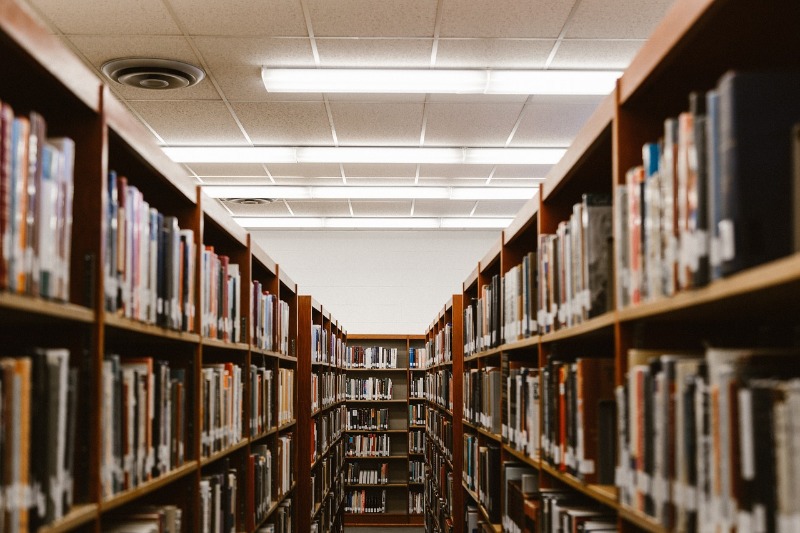
If you’re serious about reaching peak effectiveness, do the majority of your reading at the time of day when you are most alert. Choose a room with lots of daylight but away from distractions. Don’t overly force yourself to concentrate. Work for short periods of 30-40 minutes then take a break. Putting this into practice will eliminate wandering off topic. A short period of sustained activity is better than a long period of significantly sub-optimal performance.
Back Skipping
Fear of missing something often leads people to skip back and re-read parts of a sentence. In reality this is counter-productive and unnecessary. If you missed something it is very likely that the author will restate the same thing in a slightly different way and you catch it later on. If something is unclear or you come across an unfamiliar word, the best way to overcome this is to collect more context. Think about doing a jigsaw puzzle. If you pick up a piece and don’t know where it goes, staring at it won’t help. Instead, you build up the corners, edges and blocks of colour. Once you have the context it’s obvious where the piece fits. If you watch a movie at the cinema, you can’t pause and rewind the action and probably wouldn’t want to if you could. Even a complex plot makes sense by the end as the different threads of the story are drawn together.
Tell yourself you’re only going to read each sentence once and be able to assimilate everything you need in an appropriate level of detail. This doesn’t have to be 100% and average comprehension when reading normally is only 60 to 80% anyway. If you get to the end of a chapter and feel you haven’t comprehended what you read then you can look up unfamiliar words and re-read. You’ll find that 99 times out of 100 you’ll have got enough and won’t need to go back.

Let’s calculate the impact of even modest back skipping. Say you re-read 3 in every 20 words and, as before, you read 240wpm. Divide by 20 so that’s 12 lots of three words (36). If you didn’t back-skip you’d have a speed of 276wpm. That’s only a relatively small increase but mounts up over time. It ignores the other consequences of breaking your rhythm and ultimately hindering comprehension too.
Chunks of Words
As previously mentioned, average readers tend to take in, on average, two words per fixation. With practise, it is possible to extend this to four or even six words (i.e. half a line) at a time. It takes the same length of time to fixate on a larger group of words as it does on a single word or small group.
If you take in meaningful chunks these can be linked together more easily thereby increasing comprehension. Words read slowly in isolation can easily become dissociated, allowing your mind to elaborate upon them beyond what the author was aiming to convey. These errant thoughts disrupt comprehension. By taking chunks of meaning rapidly, there isn’t time to deviate from the intent. Of course, if you’re reading poetry, for example, you might want to indulge yourself in the ideas and imagery which it evokes. In this case slow down and take in one word at a time. In most of your reading, especially for study or work, you need to extract what you need and move on.
It’s a very obvious calculation. If you read four words per fixation instead of two, you double your reading speed. If you combine this with shorter fixations mentioned previously you get a fourfold increase. When adding in the slightly more modest boosts from ‘always going forwards’ and ‘keeping your focus on the page’, you end up significantly beyond quadrupling your speed. I’ve only taken very conservative figures – with concerted effort these can be significantly increased. There are also techniques we teach in Speed Reading training which support and enhance those covered in this blog post.
You can see that quadrupling your reading speed or going even faster is more than a dream. In the words of Captain Jean-Luc Picard, “Make it so!”